
Projects
Things I've built.
Please note that many of these projects cannot be found online due to some server problems I'm experiencing.
-
Readiamo
A social reading platform originally an Android app, designed to connect readers based on their interests and provide personalized book recommendations through implemented recommendation systems.
-
A school project website that collects and shares science-related books and reading suggestions, created to help others discover and explore science through reading.
-
Aeacus
An app for managing 2FA codes: import from QR codes, modify them, OTP/HOTP, create 2FA codes, manual insertion, etc. It will soon be available on the App Store.
Petty Projects
Small experiments and tools. Nothing serious.
-
A data structure that maps the internal contradictions of a belief system as an
N × N × Ktensor, where N is the number of beliefs and K indexes market regimes. Each cellT[i, j, k]holds a contradiction score in[0, 1]computed by a local NLI model with no API dependency. Scores are symmetric by construction:score(a, b) = (NLI(a→b) + NLI(b→a)) / 2. Context weights modulate scores per regime asT[i, j, k] = base × wk, allowing the same belief pair to carry different tension under crisis versus expansion. Core operations:max_contradiction()over any context slice;min_removal_set()as a greedy 2-approximation of Minimum Vertex Cover on the induced conflict graph;tension_clusters()via Union-Find over edges above a threshold. -
A blind arbitrage detector for prediction markets. It decomposes cross-venue price discrepancies into exploitable hedging opportunities by calculating effective cost-per-payout under venue-specific fee regimes. The system computes the effective cost to guarantee $1 payout on each side, accounting for whether fees are charged upfront (taker structure:
c = ask × (1 + r)) or deferred on profit (profit structure:c = ask / (1 − (1 − ask) × r)). WhencYES + cNO < 1.0, a risk-free arbitrage exists. Optimal capital allocation scales inversely with cost to equalize payout across outcomes. Built on market-neutral hedging combined with fee structure asymmetry across platforms. -
A news stream decomposition system grounded in StrADiff (arXiv:2604.04973). The news stream is treated as an observation channel: each article embedding
y ∈ ℝdis modeled as a mixture ofKunobserved causal forces, with the full corpus forming a matrixY ∈ ℝN×d. StrADiff assigns each latent dimension its own reverse diffusion branch and an independent Gaussian process prior with a learned length-scaleℓₖ, producing a source activation matrixS ∈ ℝN×K. A shared MLP decodergφ(S)reconstructs the observations, with the joint objective combining reconstruction, GP, diffusion, and KL terms end-to-end. An edge between two articles in the output graph carries a source-overlap weight derived from their rows inS; a high weight is the detectable signature of a shared upstream latent force, independent of surface topic. The pipeline runs on GitHub Actions every 12 hours: articles are fetched via NewsAPI.ai, embedded withall-MiniLM-L6-v2, decomposed by the source model, and written to a staticdata.jsonconsumed by a React/Cytoscape.js frontend. -
Auditor
An AI system that uses Claude to create knowledge bubbles about the user and uses them to interact, creating a more personalized experience.
-
Haraka
A transliteration and translation tool from Arabic that allows using the Arabizi alphabet.
Publications
I'm a first-year student, still learning how to write proper research papers. This section will be updated as I progress.
-
An essay synthesizing seven historical accounts of intelligence (Spearman, Gardner, Kahneman, Shannon, Chollet, Friston, Deutsch), examining what each perspective captures correctly. The paper proposes a unified synthesis: the Generative Model Revision account, defining intelligence as the capacity to build and efficiently revise compressed generative models of the world under uncertainty. Rather than attempting to resolve a century-old debate, this work aims to understand it with sufficient precision to identify where the genuine disagreements lie.
-
In this project, I developed an enhancement to the Boyer-Moore-Horspool algorithm specifically for natural language processing. My approach involves preprocessing the search pattern to identify the "anchor", its statistically least frequent character. During the search, the algorithm performs its first verification at this high-entropy position, allowing for a faster discard of non-matching windows. This implementation demonstrates how integrating linguistic statistics into classical pattern-matching can significantly improve performance without increasing the complexity of the shift heuristics.
Books
Books I recommend.
-
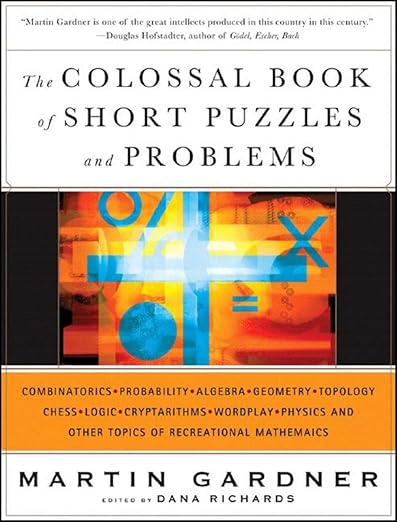 The Colossal Book of Short Puzzles and Problems
I loved this book when I read it in high school. It doesn't require any particular mathematical knowledge, just curiosity and the willingness to think.
-
 Against Intellectual Monopoly
A really interesting take on patents and intellectual property. It made me question some of the assumptions I had about how innovation works and look at the whole topic a bit differently.
-
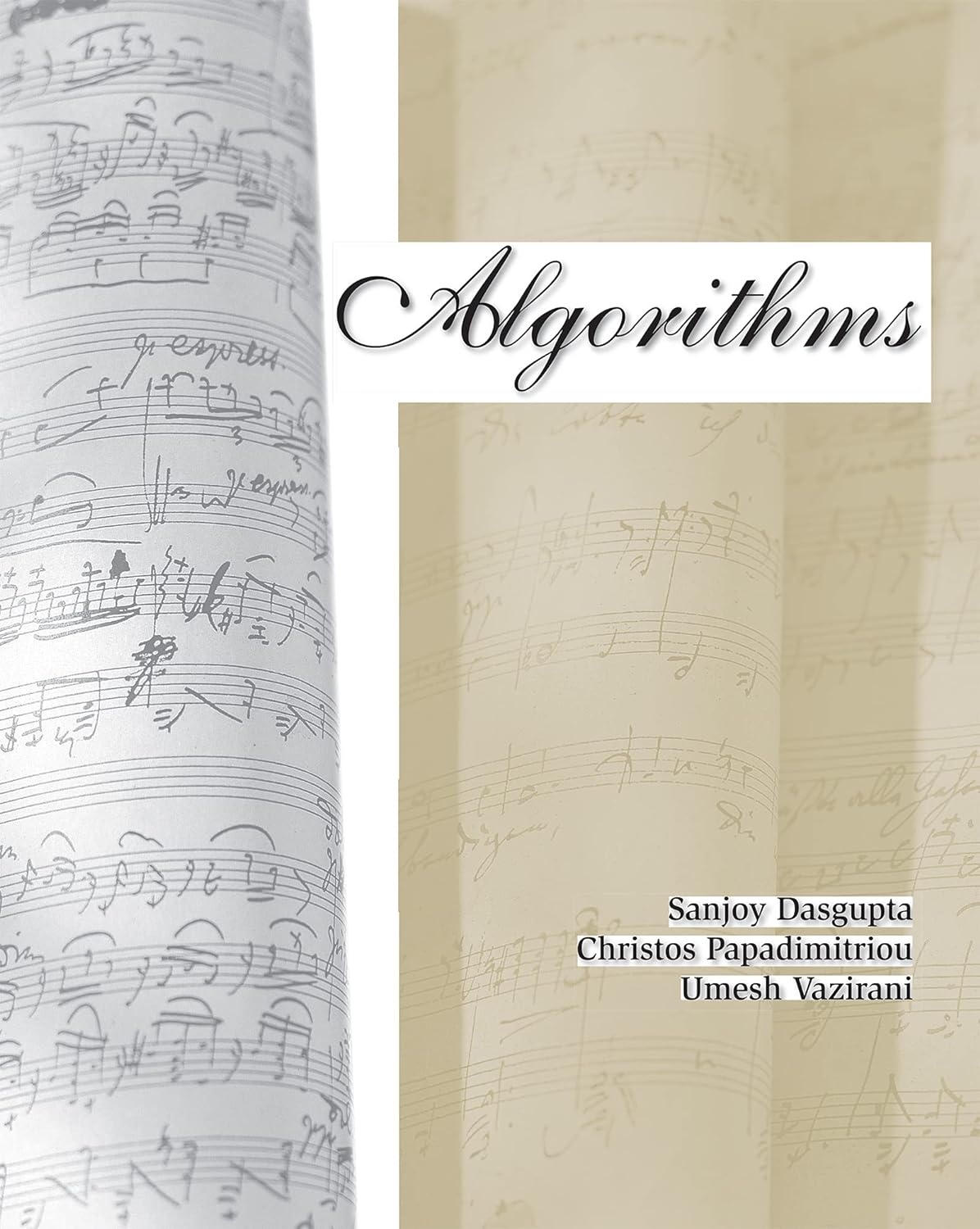 Algorithms
My first book in the CS world, which I read in 11th grade. Sorry guys, I'm just emotionally attached to it.
About
I'm studying Applied Mathematics at Politecnico di Milano and I'm part of Collegio di Milano.
I enjoy building things, solving problems, and learning how things work.
Outside of that, I'm into football and cycling.
Recognitions and Awards
- ITACPC – 3rd place, competing solo (apparently, finding teammates was the hardest part)
- Italian Mathematics Olympiad – National Semifinals
- Collegio di Milano Fellowship
- Fratelli Zilli Scholarship (2024, 2025)
- Recognized among the Top Students at ITST Kennedy (2024, 2025)